Weighted walking
Weighted walking: a guide to walking with added resistance
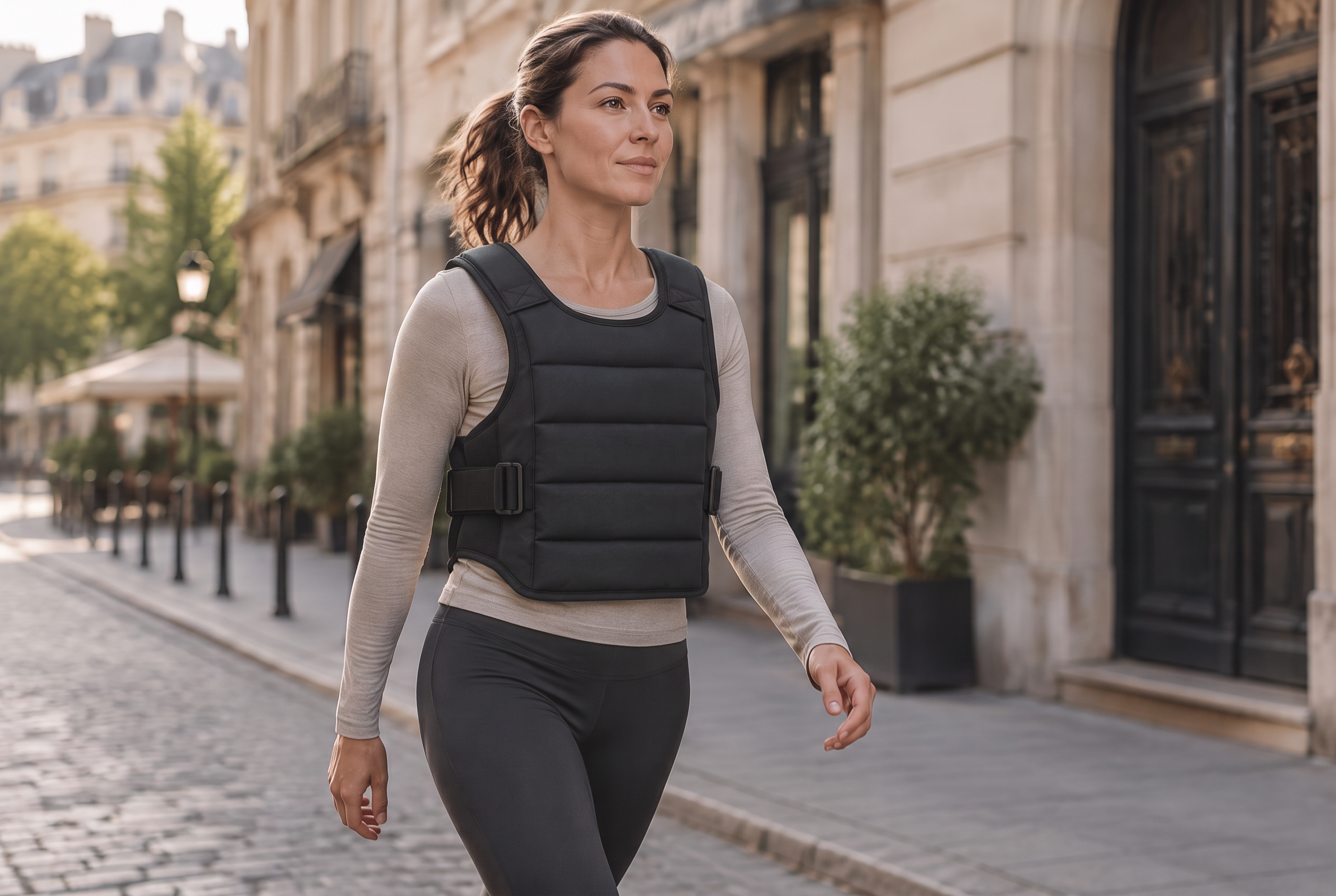
Weighted walking means walking while carrying a moderate, evenly distributed load — usually in a vest. It keeps everything that makes walking easy to fit into a day, and adds a little resistance to it.
7 min read

What is weighted walking?
Weighted walking is ordinary walking with added load. The route, pace and routine stay the same; the difference is that you carry a few extra kilograms while you walk.
Most people do it with a weighted vest, because a vest keeps the load close to the body and leaves the hands free. Others use a backpack, which is closer to rucking.
How it works
Carrying load while walking asks a little more of the body than walking without it. How much more depends on the weight, how it is distributed, the terrain and your pace.
General research on loaded walking — mostly from occupational and military settings, often with much heavier loads — shows that added weight increases the effort of walking. That research does not describe any specific product, and results at lighter everyday loads can differ.
Weighted vest vs carrying weights
Hand weights and ankle weights put load at the ends of the limbs, which changes how you swing your arms or move your legs. Many people find them awkward over a longer walk.
A vest sits on the torso, close to your centre of mass. Walking mechanics change less, and your hands stay free for a phone, a lead or a coffee.
Weighted walking vs rucking
Rucking usually means walking with a loaded backpack, often with heavier weights and a more training-oriented mindset. Weighted walking with a vest tends to use lighter loads, spread front and back, as part of everyday walks.
Neither is better in every situation. We cover the differences in more detail in our rucking comparison.
Why people add resistance to walks
The main appeal is practical: many people already walk every day, and adding load is a way to get more from that time without scheduling a separate workout.
People also mention that it makes a familiar route feel different, and that it is simpler than a gym routine. We don't make claims about specific health outcomes.
How beginners can approach it
Start lighter and shorter than you think you need. Wear the vest for part of a walk you already do, on familiar, even ground, and see how your body responds over the following days.
Increase duration before increasing weight, and keep walks conversational rather than rushed.
Choosing an appropriate weight
There is no single correct weight for everyone. Body size, walking experience, posture, joints and the length of your walks all matter.
For everyday walking, many people prefer a moderate load they can wear comfortably for the whole walk rather than the heaviest vest available.
Fit and comfort
A good walking vest sits high and close on the torso, spreads the weight front and back, and doesn't bounce or shift with each step. Straps should hold it securely without restricting breathing or arm swing.
When not to use a weighted vest
Talk to a doctor or physiotherapist before using a weighted vest if any of the following apply to you:
- You are pregnant
- You have back, neck, shoulder, hip, knee or foot problems or pain
- You have a heart, lung or blood pressure condition
- You are recovering from injury or surgery
- You feel pain, dizziness or unusual shortness of breath while walking
General information only, not medical advice. Last updated 2026-09-26.