Guide
Weighted vest vs rucking: what's the difference?
Both add load to walking. They differ in where the weight sits, how much people usually carry and what the activity tends to feel like.
5 min read
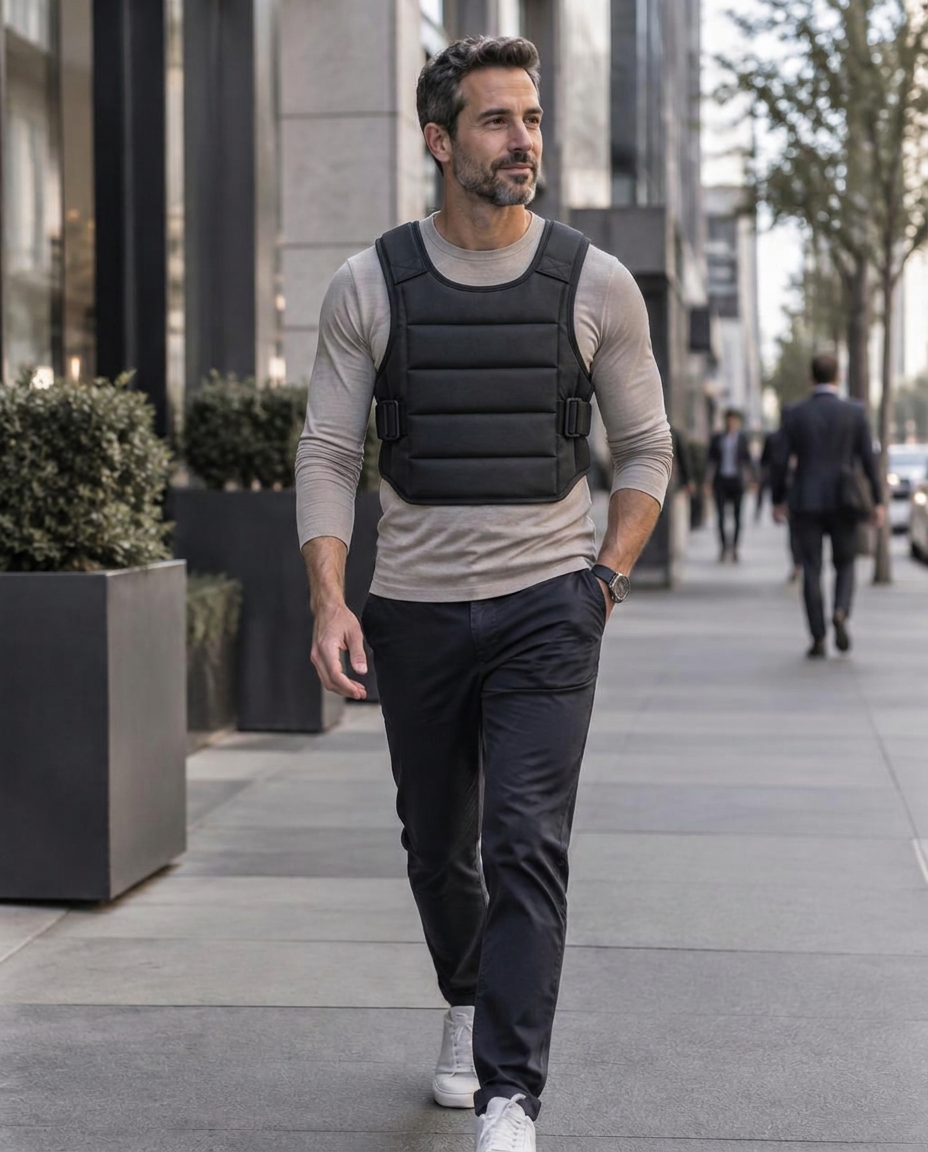
Where the weight sits
A rucking backpack carries the load on your back. A weighted vest usually spreads it front and back, closer to your centre of mass. A backpack tends to pull you slightly backward; a balanced vest less so.
Typical loads
Rucking often involves heavier loads and is usually approached as training. Weighted walking with a vest tends to use lighter loads as part of everyday walks. There is plenty of overlap.
When a rucking backpack makes sense
- You want to carry heavier loads progressively
- You already own a sturdy backpack and plates
- You want to carry gear as well as weight
- You enjoy structured, training-style sessions
When a weighted vest makes sense
- You want to add load to walks you already take
- You prefer weight balanced front and back
- You want something low-profile to wear through a city
- You don't want to carry a bag
The honest answer
Neither is always better. If you want to train with heavier loads, rucking is a good fit. If you want to add a moderate load to everyday walking without changing much else, a walking vest is often simpler.
General information only, not medical advice. Last updated 2026-09-26.