Guide
Walking with a weighted vest: what you need to know
Putting on a weighted vest turns an ordinary walk into a slightly harder one. Here is what actually changes, and how to make it comfortable.
5 min read
What changes when you add a vest
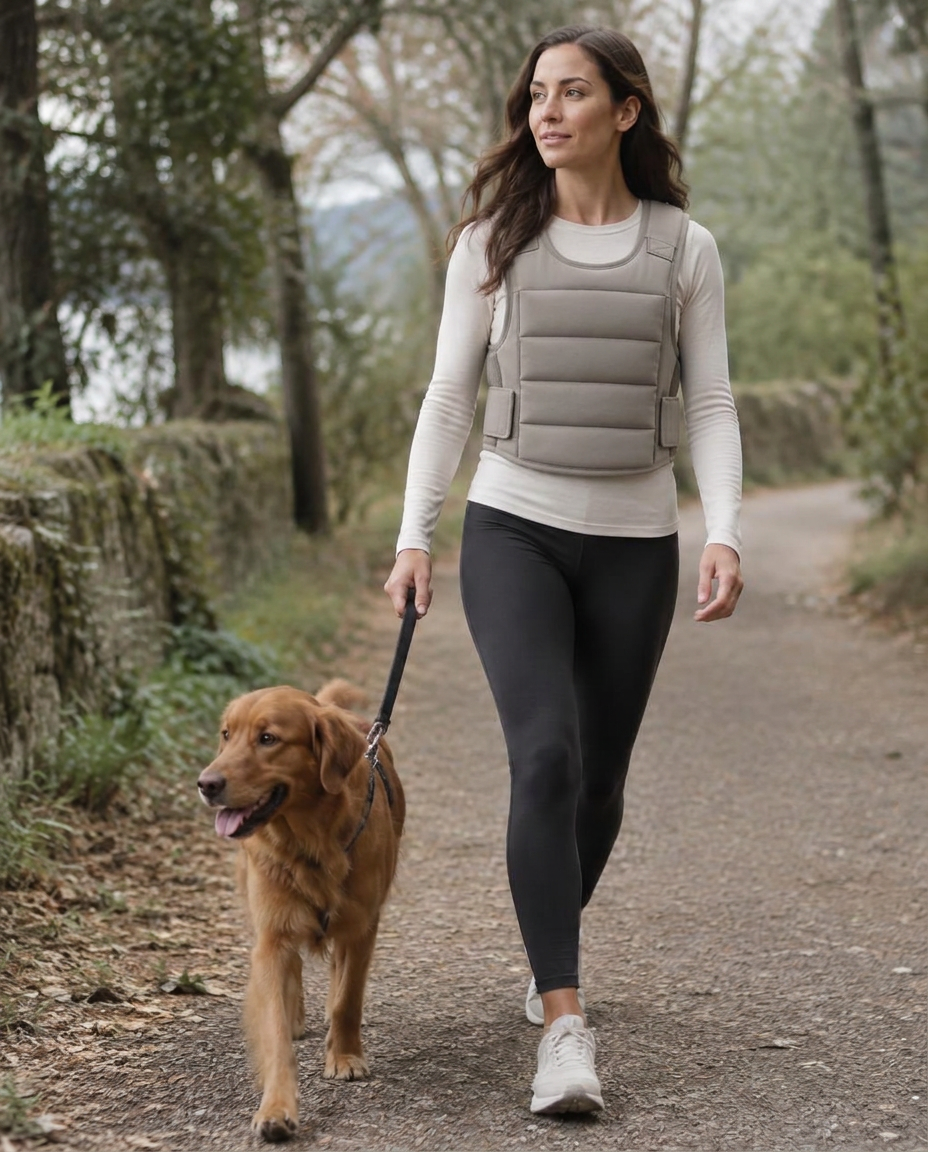
The walk feels a little more demanding, especially on hills and stairs. You may notice your breathing and warmth more than usual. A well-fitted vest shouldn't change how you walk much.
How long to wear it
Begin with part of a walk — for example the first 10 to 20 minutes — and build up gradually over several weeks. If you feel sore or tired the next day, stay at that level for longer before adding time.
Posture and pace
Walk tall, with relaxed shoulders, and let your arms swing naturally. Avoid leaning forward to compensate for the weight. Walk at a pace where you can still hold a conversation.
Terrain
Flat, familiar routes are the easiest start. Hills, stairs and uneven trails add effort and ask more of your balance, so introduce them later.
What to wear
Wear the vest over your normal walking clothes. A thin layer between vest and skin is usually more comfortable. Because the vest adds warmth, you may need one layer less than usual.
Running is a different activity
Weighted walking vests are designed for walking. Running adds impact, and running with weight changes the load on joints considerably. We don't recommend running in WALK 4.
General information only, not medical advice. Last updated 2026-09-26.